Table of Contents
Commercial Glass Restoration: Notre Dame Stadium Case Study
When you’re managing a stadium, a luxury hotel, or a medical center, “just replace the glass” isn’t a solution—it’s a budget crisis, a scheduling nightmare, and a tenant complaint waiting to happen.
That’s where commercial glass restoration comes in.
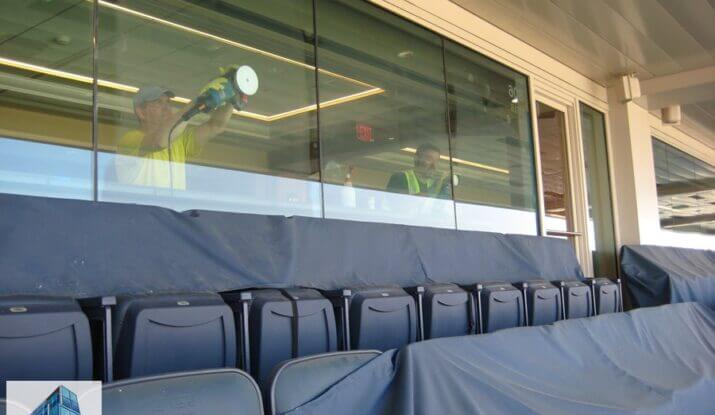
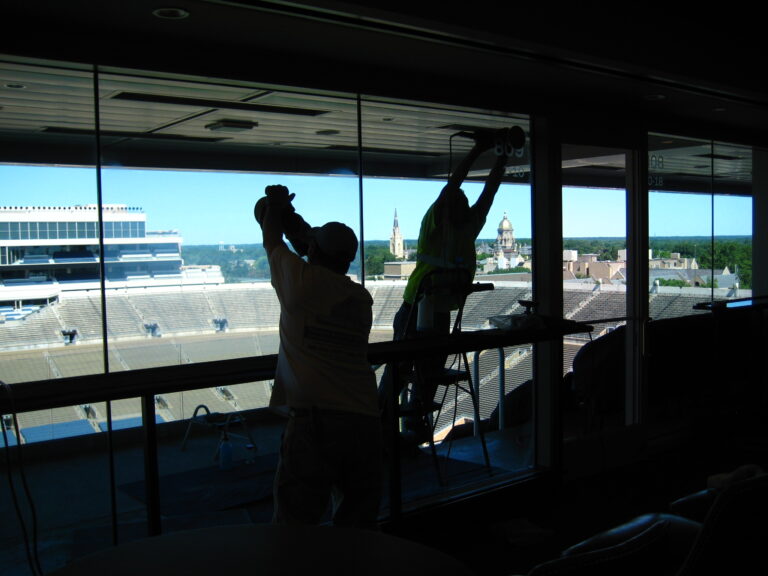
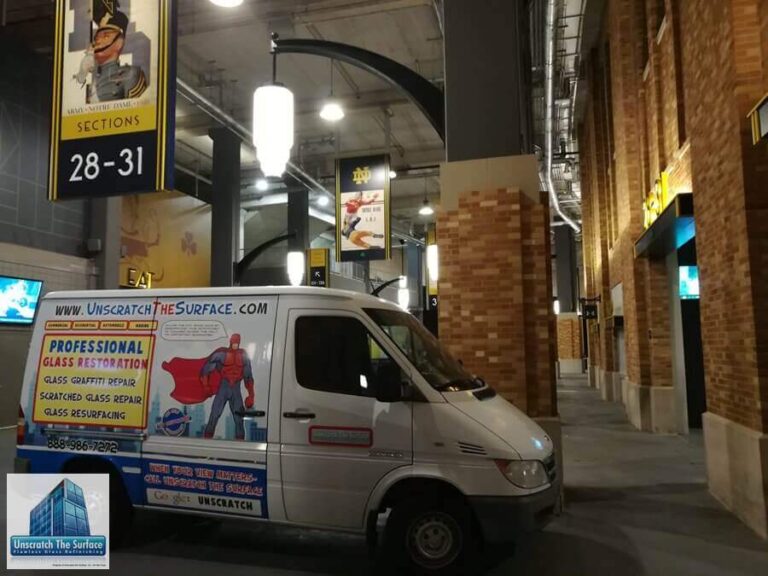
Below: how we restored 8,500 sq ft of tempered glass at Notre Dame Stadium—without replacing a single panel, without disrupting game day, and for approximately 25% of the cost of replacement glass alone.
Project Snapshot: Notre Dame Stadium | 2018
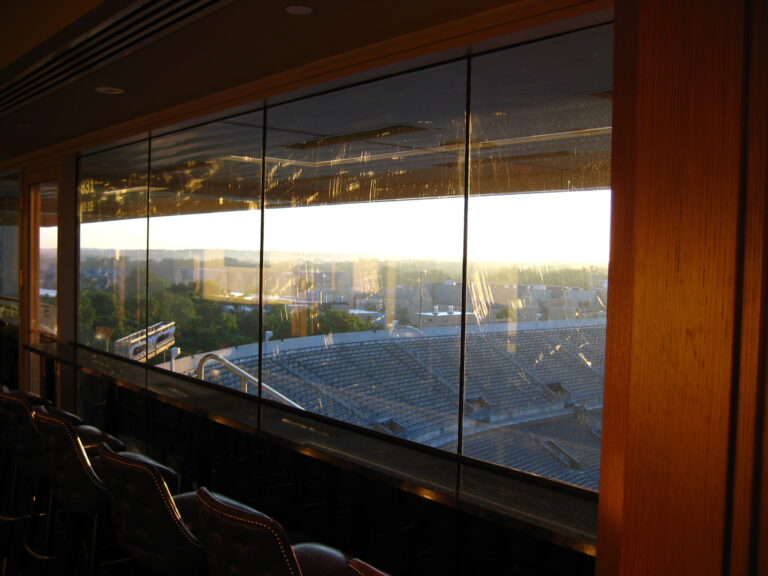
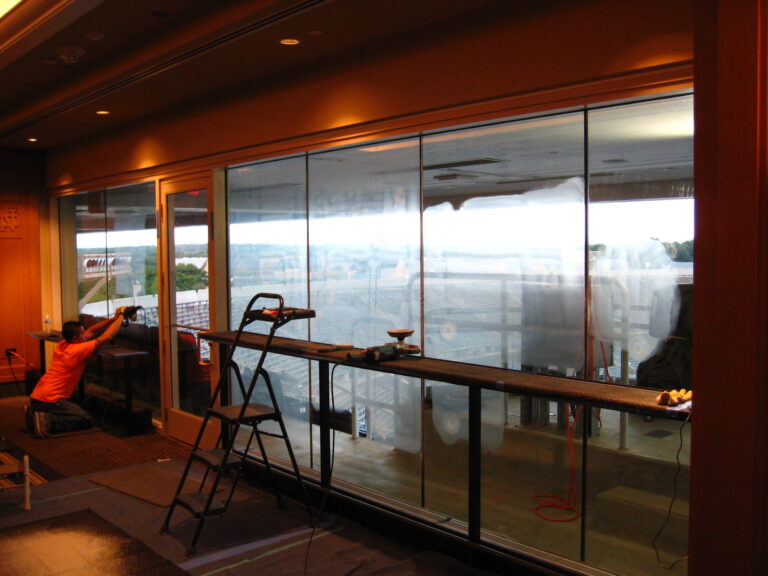
- Scope: ~8,500 sq ft of tempered glass across 4 levels, field-facing premium seating areas
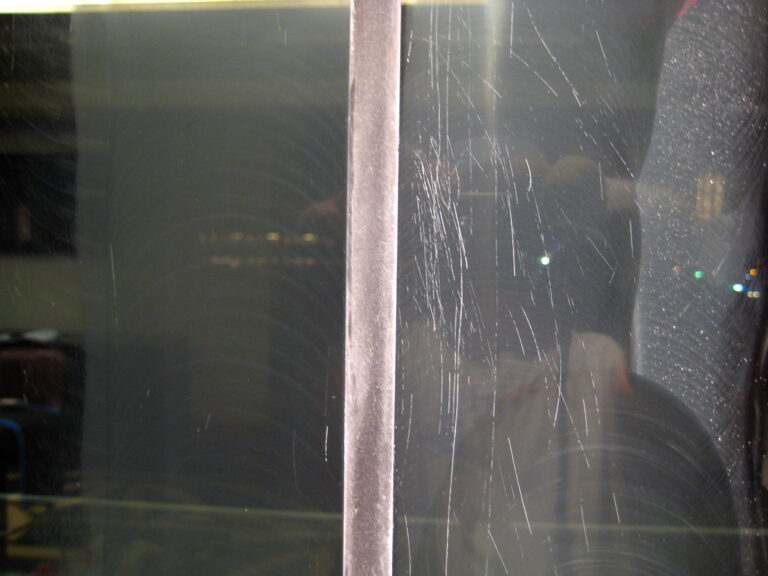
- Damage: Protective film left on for 2 years (vs. 3-month max); removal required heavy-duty scraping that, combined with standard fabrication debris, created deep, widespread scratches
- Timeline: ~3 months on-site, working 6 days/week including overnight shifts
- Key Constraint: Union-only labor requirement on active construction site
Richard’s Commercial Insight: “When the clock is ticking and the eyes are watching, restoration isn’t a compromise—it’s the only logical play.”
The Challenge: Union-Only Labor + Zero Disruption
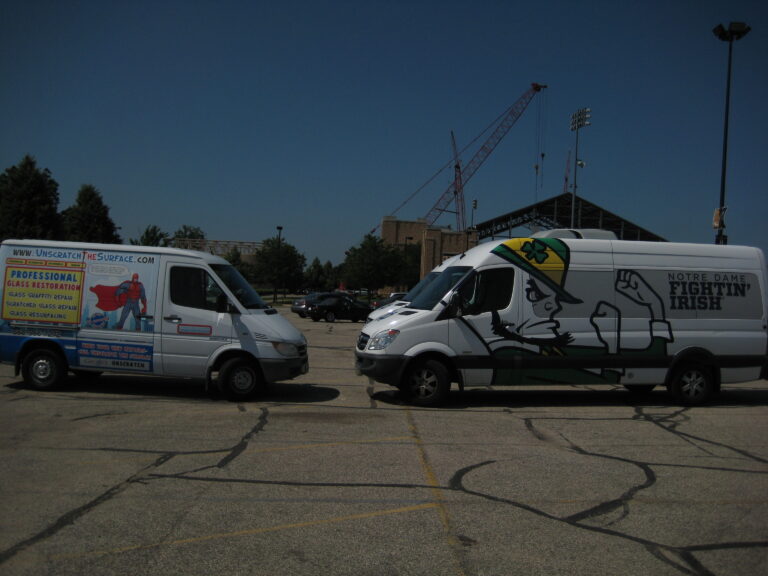
Notre Dame’s modernization project required union-only labor—a constraint that eliminated many restoration contractors. A competing firm from Chicago (90 miles away) submitted a bid but was unwilling to work within the local union structure.
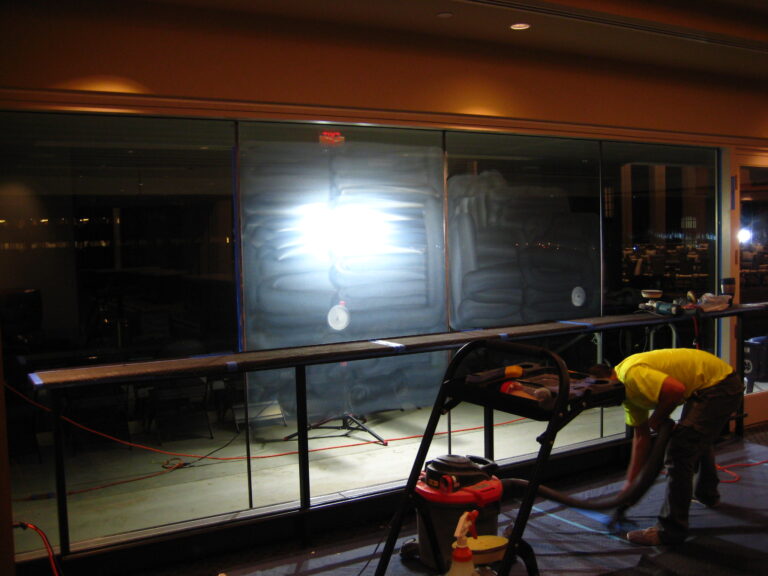
Work began during daytime hours but shifted to overnight schedules once stadium activity increased to minimize disruption to academic and event operations.
Our Solution: Consultant Engagement Model
We structured our engagement as a consultant, partnering with the builder’s local union helpers (on the builder’s payroll) to meet compliance requirements.
The economic logic was simple: Any cost associated with mobilizing our own crew would have been passed through to the contractor. By working within their existing labor structure, we delivered the same expertise at a lower net cost.
- ✅ Eliminated costs typically passed to contractors: travel, lodging, per diem, overtime, additional workers’ comp
- ✅ Builder covered base wages per union agreement; we provided discretionary bonuses directly to the helper as appreciation
- ✅ Result: Saved the general contractor approximately $80,000 versus the competing commercial glass restoration company bid
Richard’s Commercial Insight: “It’s not magic—it’s just math. When you work within the contractor’s existing labor structure, everyone wins: compliance is met, costs are controlled, and the glass gets fixed.”
The Patent Behind the Polish: Why Process Matters at Scale
Restoring 8,500 sq ft of stadium glass isn’t about having the right buffer—it’s about having the right system.
We developed and hold U.S. Patent #8029336 for a dry glass resurfacing method that uses:
- ✅ Progressive, color-coded abrasive grits selected by scratch depth
- ✅ Temperature monitoring to keep glass under 150°F (prevents thermal stress)
- ✅ Feathered work zones to eliminate optical distortion
- ✅ Dry process = no liquid containment, no staining risks on active job sites
View full patent documentation here.
Why This Matters for Commercial Projects
- Consistency: Documented steps = predictable results across thousands of square feet
- Scalability: Systematized process enables rapid crew training without compromising quality control
- Risk Mitigation: Patented methodology = accountability, repeatability, and compliance-ready documentation
The Results
- ✅ All glass panels restored to like-new clarity—no panels removed or replaced
- ✅ Restoration completed for ~25% of the cost of replacement glass alone (excluding removal, disposal, and reinstallation labor)
- ✅ Saved general contractor approximately $80K vs. competing bid by leveraging local union labor structure
- ✅ Project completed within 3-month window, finishing before the home season peaked
Richard’s Commercial Insight: “Most successful commercial glass restoration companies today use a process derived from what we pioneered. When you work with us, you’re not getting a copy—you’re working with the source.”
Why This Matters for Property Managers & GCs
This project demonstrates three commercial-grade differentiators we bring to every job:
- Patented Process: U.S. Patent #8029336 ensures consistency, scalability, and documented quality control
- Flexible Engagement Models: Consultant + local labor structure = compliance + cost savings
- Minimal Disruption: Overnight shifts, dry process, and experienced crews keep your operations running
This consultant + local labor approach + patented process is repeatable: we applied the same strategy at Shangri-La Hotel, delivering cost savings versus local Canadian restoration firms.
Ready to Restore—Not Replace?
For property managers, general contractors, and facility directors: We speak your language—budgets, schedules, compliance, and minimal disruption.
- 📞 Get a Commercial Quote: Contact Us
- 🗂️ Download Our Commercial Capabilities Sheet: Project Estimator
- 📍 Service Areas: View Our Services
P.S. We bring our own coffee. And we pick up after ourselves. (Your tenants will notice.)
<!--
"[Client testimonial from Google Reviews would go here]"
— Notre Dame Stadium Project Stakeholder
-->
Frequently Asked Questions: Commercial Glass Restoration
Can you work in occupied venues without disrupting operations?
Yes. At Notre Dame, we shifted to overnight shifts once stadium activity increased. We also protected all surrounding surfaces (floors, granite, finishes) with moving blankets and blue tape—neat and tight. Dust control was maintained throughout with active vacuuming. No tenant complaints. No damage claims.
Are you approved for union-only job sites?
Yes. We structured our engagement as a consultant, partnering with the builder’s local union helpers (on the builder’s payroll) to meet compliance requirements. This saved the general contractor approximately $80K versus a competing bid from a non-local firm unwilling to utilize local union labor.
Do you have experience with large-scale stadium or venue projects?
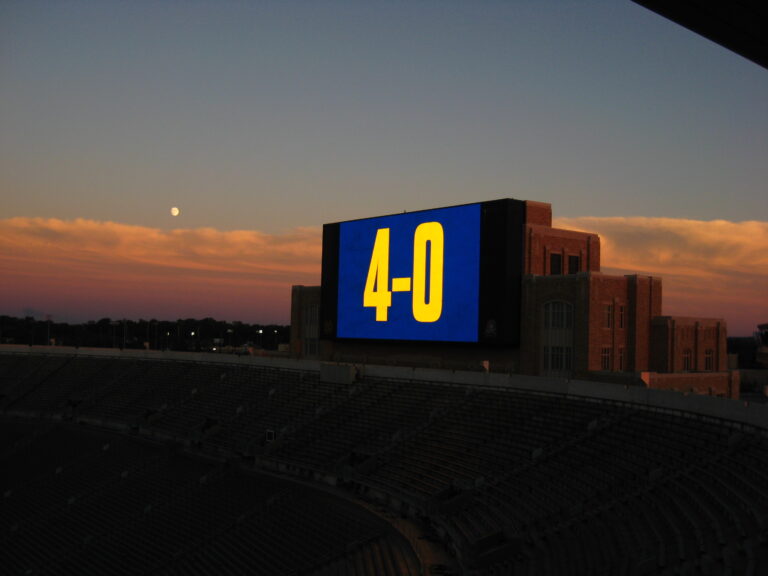
Yes. The Notre Dame Stadium project included ~8,500 sq ft of tempered glass across 4 levels, spanning end zone to end zone. We completed the restoration within a 3-month window, finishing before the home season peaked (Notre Dame was 4-0 at completion).
What makes your process different from other glass restoration companies?
We developed and hold U.S. Patent #8029336 for a dry glass resurfacing method. This systematized process enables rapid crew training, consistent results at scale, and documented quality control. The methodology we pioneered is now the industry standard for successful glass restoration.
Do you protect surrounding finishes during restoration work?
Yes. We protect everything around the glass—floors covered with moving blankets, granite shelves wrapped and taped, all secured neat and tight. Damage claims aren’t part of our process. (This guy runs a tight ship.)
What’s the typical cost savings vs. glass replacement?
At Notre Dame, restoration was completed for approximately 25% of the cost of replacement glass alone—excluding removal, disposal, and reinstallation labor. No glass panels were removed or replaced. All 8,500 sq ft was resurfaced to like-new clarity.